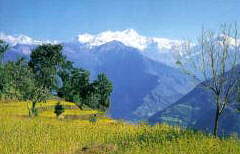
There are many beautiful and interesting places to visit in Nepal. The places are full of history and historical remains and are remarkable for their beauties. Most of the places can be easily reached from Kathmandu by road or by air.
High in the Himalayan Mountains lies the small Kingdom of Nepal, with its lofty mountains, deep valleys, lush jungles, exotic wildlife and diverse peoples. Mostly known as the ?Land of Everest? or the ?Birthplace of the Lord Buddha?, Nepal has a variety of attractions to keep tourists coming back for more.
Visit Nepal - We welcome you to Nepal, the country which is one of the most exotic destinations of the world with Adventure, Cultural, Pilgrimage & Wildlife Travel Packages. We also offer hotel reservation & hotel holiday packages.
For more details information about Interesting Places to Visit in Nepal please Contact Us
 Kathmandu;
Kathmandu, the capital and the largest city of Nepal, derives its name from Kasthmandap or "house of wood" a pagoda-style temple. A few steps away is the Temple of the Living Goddess, where the clients may catch a glimpse of the Kumari at one of the open windows overlooking the inner courtyard. All around the splendour of historical monuments is the hustle & bustle of the market place. Vegetable vendors, trees of flutes, salesmen with their wares displayed on their person, souvenir hawkers, street shop selling imported goods and tucked away in a quiet corner the glittering bead market for custom made bead necklaces.
Patan;

Patan is also known as Lalitpur or the "city of fine arts" and is the oldest city in the valley. This Buddhist City is said to have been founded by Emperor Ashoka in the 3rd century BC. Patan is the cradle of arts and architecture of the valley, a great center both of the Newari Buddhist religion and of traditional arts & crafts with 136 bahals or courtyards and 55 major temples. Well known among these are the Krishna Mandir, Hiranya Varna Mahavihar, Kumbheshwar temple, Jagatnarayan temple & the Mahabouddha temple. Patan is enclosed within 4 Buddhist stupas set on the four-corners of the outer boundaries of this ancient city. A tour of Patan would also include a visit to the Tibetan refugee village to witness the hand weaving of Tibetan carpets using age-old methods of dyeing and finishing. Three or four persons at each loom weaving traditional designs, chatting & singing can also be seen here.
 Bhaktapur;
Bhaktapur or Bhadgaon meaning the "city of devotees" lies 14 km east of Kathmandu. It is the home of medieval art & architecture and still retains its rich medieval aroma. A city of farmers, Bhaktapur is also known for it's pottery and weaving. Bhaktapur is the most charming and the best preserved of the valley?s three cities. The intricately carved temples, alleyways and timeless atmosphere of this place is simply intriguing. The major sightseeing places in Bhaktapur include Durbar Square, the Golden Gate, Palace of 55 windows, Bell of the barking dogs, Nyatapole Temple, Bhairavanath Temple, Dattatrya Temple, Pujari Math etc;
 Boudhanath;
The stupa of Bodhanath lies 8 km east of Kathmandu. It is the biggest Stupa in Nepal and is located on flat land and encircled by houses & monasteries, where Rinpoches reside. This colossal Stupa is set on concentric ascending terraces in the powerful pattern of a Mandala. Around the base of this strikingly enormous and simple stupa is a ring of 108 images of the Buddha and 147 insets containing prayer wheels.
 Bungmati & Khokana;
The twin villages of Bungmati & Khokana date from the 16th century and are located south of Kathmandu, down a rutty road dotted with Chaityas. Bungmati is the winter home of lord Rato Machhendranath, the protector God of Patan. The shrine of Karya Binayak is located between the two villages. At Khokana ancient oil presses can be seen at work in village houses.
 Budhanilkantha;
 9 km north of Kathmandu in a small pond at the foot of the Shivapuri Hills lies the half-submerged massive black stone statue of the reclining Vishnu resting on a bed of snakes. Worshippers strew the sleeping Vishnu with offerings of flowers & rice. It is a monumental sculpture from the Lichhavi period.
Champa Devi; 
The hike to the top of Champa Devi (2,278m), the highest peak on the Chandragiri Ridge south west of Kirtipur, affords a panoramic view of the west Kathmandu valley, back dropped by the snow covered Himalayas. Either starting from Chovar or from Pharping the trail climbs steeply to join at a saddle close to the top. A Hindu shrine and a white stupa mark the Champa Devi summit. Several return routes are possible. Staying close to the ridge continuing west, a trail descends from the second saddle north to Kirtipur. Another descends from the third saddle and reaches Kisipidi.
Chandeshwari;

Chandeshwari shrine is located north of the sprawling trading town of Banepa near Dhulikhel. A track leads northeast past the town hospital to the temple on the bank of a forested gorge. The temple is dedicated to Parvati, whom they called upon to slay ?Chand?, the most fearsome of the demons. It thus became known as Chandeshwari, "the slayer of Chand". The main attraction is a remarkable fresco of Bhairav, painted on the western wall of the main structure. The torana and struts of the three-tiered temple are richly carved with the eight Astha Marikas, or "Mother goddesses" and eight Bhairavs.
Changunarayan;

The road access to Changunarayan, 18 kms east of Kathmandu is from behind Bhaktapur. Alternatively, it is a 45 minutes walk up from the Sankhu road, across the Manohara River, using the old pilgrim?s route or a pleasant half-day hike along the ridge from Nagarkote on the eastern valley rim. The lavishly decorated two-tiered temple was rebuilt after a fire in 1702, but the earliest inscription in the valley dated 467 A.D. testifies to the considerable talents of the Licchavi King Mandeva I, Nepal?s first great historical figure. The temple stands in a spacious courtyard, littered with priceless stone sculptures from the 4th to 9th century A.D. (Licchavi period). This golden age of classical Newari art produced masterpieces that were entirely religious in character.
Chapagaon; 
A rough track to the south of the Kathmandu Valley winds steeply downhill, through intricately terraced fields of reddish brown soil to the ancient Lichhavi village of Lele, on through terraced mustard fields and bamboo groves to Chapagaon. An important tantric temple of Vajra Varahi is located here in a sacred grove of trees, built in 1665 ? however, the site is much older. Various naturally sculpted stones strewn about are regarded as images of Ganesh, Bhairav and the Ashta Matrika.
Chovar; Carved out of a hillside, the Chovar gorge is the only outlet for all the waters of the valley. Legend has it that Manjushree, an ancient saint cut the mountain with his magical sword, to drain out the water from the Kathmandu Valley which was then just a lake. There is a small but picturesque temple of Adinath on the top of the hill with a magnificent view of the snow capped peaks. Just beyond the gorge is a temple of lord Ganesh. The main image of the shrine is a massive rock, naturally carved.
Dakshinkali;

Dakshinkali is 45-minute drive south from Kathmandu. Located in a dark valley at the confluence of two streams, the shrine of Dakshinkali is the most spectacular of all Kali temples. Animal sacrifices are offered to this deity signifying fertility and the procreative powers of the Female, every Tuesday & Saturday. The animals are presented to the priest who will ritually decapitate them with a khukuri knife & bathe the black stone image of Kali in blood.
Dhulikhel;

30 kms east of Kathmandu lies the small resort town of Dhulikhel set on a hill top, enveloped in copper soiled terraces with magnificent views of the central Himalayan peaks. Dhulikhel is well known for its sunrise views and a number of day trails lead along the north ridge of the town. A good way to get a glimpse of Nepalese village life.
Godavari;
18 kms south of Kathmandu lies the Royal Botanical Gardens at Godavari. With its rushing streams and shady meadows it is a popular picnic spot. It also has a notable collection of orchids, cactii & ferns. A quiet path leads to the Godavari Kunda, a spring where the sacred water of the Godavari river pours from the mountains.
Kakani;
The village of Kakani lies 29 kms north west of Kathmandu City. Famous for magnificent views of the sun setting over the north western Himalayan range; the Ganesh Himal massif, Gaurishankar (7,134 m), Choba Bhamare (6,016 m), Himalchuli (7,893 m), Annapurna (8,091 m). The drive to Kakani & back along the Trishuli Road is scenically rewarding with green forest & mountain grandeur on one side and fertile river flats and terraced hillside cultivation on the other.
Kirtipur;
Perched on twin hillocks and clinging to a saddle about 5 km south west of Kathmandu lies the village of Kirtipur. A long flight of steps leads up to Kirtipur from the valley floor & a motorable road goes part way up the hill. Steep paths link brick houses built on terraces. The villagers dressed in traditional costume work on ancient looms. The people are well known for their strength and valour. Many historical battles were fought and won by the inhabitants of Kirtipur.
Kopan Monastery; A center of Mahayana Buddhism was established in 1969 by two Lamas; Lama Thupten Zopa Rinpoche & Lama Thupten Yeshe. Since its inception the center has been responsible for introducing thousands to Buddha's teaching through meditation courses, ectures & retreats.
Nagarkot;
The tiny settlement of Nagarkot clings to a hilltop 36 kms east of Kathmandu at an altitude of 2,099m. It is one of the best vantage point to view the peaks - from the Annapurnas to Everest, the peaks seem no more than a day's walk away. It is also possible to do a day hike from Nagarkot to Dhulikhel along the valley rim.
Nagarjun;
Nagarjun, a prominent forested hill, west of Kathmandu topped with a Buddhist stupa with superb views of Ganesh Himal, Langtang and the Kathmandu valley. A dirt road winds to the top (2,096m) though a trek would take two hours. A return trail descends the southwest side of Nagarjun to Ichangu Narayan and reaches Kathmandu via a dirt road that eventually comes out behind Swayambhunath.
Namo Buddha;
Namo Buddha meaning "hail to the Buddha" a sacred site, where according to legend Buddha sacrificed his body to feed a starving tigress & her cubs. A carved stone slab at the main stupa depicts the moving story. A dirt road (suitable for 4 wheel drive vehicles) leads up to Namo Buddha from Dhulikhel. A different trail returns descending south through a forest heading west up a long vale for a round trip walk of six to seven hours, or 2 to 3 hours to Panauti.
Panauti;Located at the confluence of the Punyamati & Roshi Khola rivers, Panauti was once an important staging post on the Tibet trade route with pre-Lichhavi origins. The banks of the river are now crowded with temples, shrines and cremation ghats. Across the river lies the recently restored Brahmayani temple. The Indreshwar Mahadev temple is a 15th century Newari structure with exquisite woodcarvings especially on the roof struts.
Pashupatinath; It is situated 5 kms east of Kathmandu on the banks of the sacred Bagmati River. The temple of lord Shiva, Pashupatinath, with a tiered golden roof & silver doors is famous for its superb architecture. Entrance to the temple precinct is forbidden to non-Hindus. The best view is from the terrace on the wooded hill across the river. The large gilded triple-roofed temple was built in 1696 AD though 300 years earlier there was a structure on this site. The Bagmati River is lined with dharmasalas and cremation ghats including a royal ghat reserved exclusively for members of the royal family. There is usually a cremation in progress on one of the platforms by the river, regarded as holy as it flows into the sacred Ganges. There are many occasions when the faithful take ritual purificatory baths in the river. One of the most colorful is the women's festival of Teej when dressed in their finest red and gold saris hundreds of women, laughing and singing converge on Pashupatinath.
Phulchowki;
The triple peaked hill of Phulchowki the "flower-covered hill", is highest on the valley rim at 2,762m. Lying 20 kms south east of Kathmandu, a road winds its way to the top where a small shrine is built to the mother of the forest, Phulchowki Mai. The trail up to the top takes about 4 hours through lovely rhododendron & oak forests crossing the motorable road a couple of times. Enjoy a breathtaking view of the white peaks from Himalchuli to the Everest. There is a trail connecting Phulchowki to Pharping on one side and Panauti on the other.
Sankhu; Hills surround the sleepy village of Sankhu, once on the trade route east to Helambu. Forests above the village hide an important temple to the tantric goddess, Bajra Jogini. Follow the wide stone path north of the village and walk up the steps to the temple, flanked with smaller shrines, stupas and statues. The main structure is 17th century and has a fine golden torana above the door. Behind the temple there are other shrines & sculptures.
Shivapuri; Shivapuri, at a height of 2,732m, allows one a 360 degree view of the Himalaya in the north & the Kathmandu valley in the south. The trail up to Shivapuri hill leads through small farming villages & a protected forest of Rhododendrons & orchids with little mountain streams running through it. This can be made into a most enjoyable full day's programme.
Swayambhunath; Atop a green hillock west of Kathmandu stands the great stupa of Swayambhunath, a site over 2,500 years old marking the point where the legendary patriarch Manjushri discovered the lotus of the ancient Valley lake. For centuries an important center of Buddhist learning, the painted eyes of the Buddha gaze out from all four sides of the monument. Constructed to specific rules each with a symbolic meaning, the stupa of Swayambhunath is a model of its kind. Its? dazzling white hemispherical mound represent the ladder to nirvana, itself symbolized by the umbrella on the top. The whole is hung with multi-colored prayer flags whose every flutter releases holy prayers. The faithful circumambulate the stupa clockwise, turning the banks of prayer wheels and even prostrating full-length in reverence.
Thimi;A name derived from the world "Chhemi" meaning "Capable people" is well known for its colourful painted masks, dolls & for its terracotta work including delightful peacock & elephant flower pots and imaginatively moulded candle stands & ashtrays. This village of Thimi lies on the old road to Bhaktapur from Kathmandu.
Tika Bhairav;
A Shiva shrine of an altogether difference register is located at Tika Bhairav near Lele, where Shiva is portrayed in his terrible form as Bhairav. To reach this unusual shrine, the client must travel outside the Kathmandu Valley to the adjoining Lele Valley to the south. This monumental, multi colored fresco is an abstract close-up of Bhirav's face painted on a huge brick wall, barely sheltered by a tin roof.
The Four Ganesh Temples;
Ganesh, the elephant-headed god, is one of the most favored divinities in Hinduism and is certainly the most favored in the Kathmandu Valley. The god of good luck, who casts aside obstacles is believed to be the son of Shiva & Parvati. The shrew is his vehicle and he especially likes offerings of food. Ganesh has numerous shrines throughout the Valley but four are particularly sacred. The Chandra Binayak is in the middle of the village of Chabahil, 200m behind the Chabahil stupa. This small Ganesh is enshrined amidst rich brasswork & is believed to cure diseases and external bodily injuries. The simple stone Ganesh at the Surya Binayak is halfway up the foothills south of Bhaktapur. The path heads uphill to the little shrine, considered able to give the power of speech to young children who are slow to talk. In a forest preserve between the villages of Bungmati & Khokana lies the Karya Binayak. From the road linking the hamlets, a path leads up to a beautiful clearing and the walled compound of the shrine. Here Ganesh is an elephant-shaped stone and is believed to help complete difficult tasks. Those seeking strength of character go to worship the Ganesh at Jal Binayak, just beyond the Chovar Gorge. A beautiful brass shrew faces the massive rock that represents Ganesh in this triple roofed temple constructed in 1602 AD.
Pokhara & Begnas;
Pokhara valley is a scenic 6-hour mountainside drive or a 25 minute flight west of Kathmandu. It is famous for its lakes and its location beneath the towering Annapurna massif. It is highly recommendable to visit this scenic valley, stay in small resort hotels with views of the magnificent Himalayan peaks, go boating on the calm waters of the Phewa and the Begnas lakes or go on tours or day hikes in the nearby hills or if time permits, on a well organized trekking holiday.
Further 12 km east of Pokhara at the end of a road that turns north from highway to Kathmandu lies the Begnas Lake offering the perfect nature retreat because of its relative seclusion. Splendid hiking, boating and fishing opportunities can be found here. The Begnas Lake Resort, located on a hillside of unspoiled forestland with guest rooms built on rice terraces close to the lake offers magnificent views over tranquil waters of the Begnas, beautiful ethnic villages on the opposite hillsides and the snowy mountain peaks from every room.
Koshi Tappu Wildlife Reserve (175 sq. kms); Just 1 hour flight towards east from Kathmandu to Biratnagar and 2 hrs drive, the Kosi Tappu is one of the best places in Nepal to view migratory and native water fowls; waders and shore birds during the winter months. Many species not recorded elsewhere in the region have been found here. Thousands of birds congregate here in January, February and March before they migrate north when the warm weather begins. Well-qualified nature guides take clients out on walks, jeep drives and boat rides to look for birds and the Arna, wild buffalo found only here in Nepal. We recommend to combine this tour with treks in the eastern hills or with a tour to Bhutan & Sikkim or with a Sunkosi rafting trip.
Royal Chitwan National Park (932 sq. kms);
Just a 5 hour drive from Kathmandu or a 4 hour drive from Pokhara or a 20 minutes flight from Kathmandu, Royal Chitwan National Park is proud to be called Asia?s best managed park and is home to over 50 species of mammals, 55 species of amphibians and reptiles and 525 species of birds. Wildlife that thrive here include; the great one-horned Asian Rhinoceros, Gaur, wild Bison, sloth Bear, four different species of Deer, the Rhesus Monkey and the black-faced Langur, the spotted Leopard, Royal Bengal Tiger, the fish-eating Gharial, the flesh-eating marsh Crocodile and the Gangetic Dolphin among many others. The birdlife too is very rich and varied and a delight for Ornithologists. A number of jungle lodges & camps operate inside and on the periphery of the park. They offer activities such as; elephant back safaris through the jungle in search of wildlife, nature walks, jungle drives to spot animals, canoe rides to see crocodiles & water-birds, tribal village visits etc; In the evenings, slide shows on Nepalese flora & fauna and Tharu tribal folk dances are also held.
Royal Bardia National Park (968 sq. kms); Royal Bardia National Park situated in western Terai of Nepal is one of largest undisturbed parks in the region. The park is the home of many endangered animals, reptiles and birds - including the elusive Royal Bengal Tiger. A few years ago, under a successful wildlife project several young one-horned rhinos where translocated here from Royal Chitwan National Park. Over the years, Bardia has also been a good place for tiger viewing - a rare event anywhere. Recently sightings of a group of wild elephants have further enhanced the wildlife experience possible in this beautiful and unspoiled sanctuary. A stay in this park is recommended with the combination of a short raft trip down the Karnali and Bheri rivers or with a trek to Dolpo and the Rara lake area in far western Nepal.
Tansen;
Tansen, a colourful hill town is situated at an altitude of 1,450m. It is the most popular summer resort in western Nepal on account of its location and climate. It has the most extensive views of the country?s chief attraction the Himalaya; from Dhaulagiri in the west to Gaurishankar in the north east. Walking around Tansen town is interesting or short day hike to Ridi can be a rewarding experience. It takes just five hours by car from Pokhara to reach Tansen or just a couple of hours drive from Lumbini.
Lumbini;
Lumbini, the birthplace of lord Gautam Buddha, is the pilgrimage destination of the world?s millions of Buddhists. The main attraction at Lumbini remains the sacred garden spread over 8 sq. kms and possessing all the treasures of this historical area. The Mayadevi temple (under reconstruction) is the main attraction for pilgrims and archaeologists alike. This site, identified by the Indian Emperor Ashoka?s commemorative pillar is listed as a world heritage site by UNESCO. To the south of the pillar, we find the sacred pond Puskarni, where Queen Mayadevi had her bath just before giving birth to the Buddha. Other attractions include the various monasteries and stupas erected by different Buddhist countries.
Daman;
For those seeking the ultimate pan Himalayan view, Daman is the place to visit. Located 80kms southwest of the Kathmandu valley, Daman (2,400m) offers the only unimpeded view of the entire Himalayan range. Daman is located on the Tribhuvan Highway between Kathmandu and the town of Birgunj. There is a view tower fitted with long range telescopes.
Namche Bazaar;
The name of Namche Bazaar is generally associated with that of Sagarmatha or Mt. Everest, the highest point on earth. It is the entrance to the Everest region and is 241 kms from Kathmandu and located at an altitude 3,440m. Trekkers cover this distance in 9 days from Jiri town. As the largest settlement in the Everest region Namche Bazaar now boasts of its own electricity generated from the Dudhkoshi river. One can also reach Namche Bazaar by flight to Lukla and then a 2 days trek through Phakding.
HIMALAYAN REGION
The word "Himalaya" is Sanskrit for "abode of snow". This region has an altitude ranging between 4,877 m to 8,848m. It includes eight of the 14 highest summits in the world that exceed an altitude of 8000 m, including the highest of them all, Mt. Everest (8,848 m). Only 8% of Nepal's population live in this region.
The region's culture and religion are closely linked to Tibet, and the traditional economy was (and sometimes still is) based on trans-border trade with its northern neighbour.
One can enjoy the magnificent Himalayas of this region in three different ways: take a mountain flight and enjoy the splendid view of snow capped Himalayas from the safety of the presurrized aeroplane cabins, or gaze at the panorama from popular mountain viewpoints such as Nagarkot and Dhulikhel around the Kathmandu Valley and Sarangkot in Pokhara or take the direct approach and trek to the mountain base from where you can actually touch them and feel the Himalayas.
Indeed, the best way to experience Nepal's unbeatable combination of natural beauty and culture riches is to trek through them. One should know that trekking means walking and is a process rather than a destination. As one gets into shape, it's easy to fall into walking-machine mode. Though trekking demands a physical challenge, a trekker should remind himself/ herself to stop at teashops, admire the views, splash in a stream and play with local kids. Walking and nothing, but day after day, provides illuminating insights of Nepal's diversity in terms of geography, people, religion and culture. The main precaution to be taken while trekking is not to go up too high too fast. The body should be given plenty of time to acclimatize. Acute Mountain Sickness (AMS) refers to the effects of the thin air at high altitudes which can be very dangerous and may even result in death. If you get initial symptoms like nausea, dizziness, swelling of the face and breathlessness, descend to the lower elevation immediately and seek medical help. Check out Travel FAQ for more details on trekking in Nepal.
Trekking is possible at any time of the year depending on where one is going. The most popular seasons are spring (February - May) and autumn (September-November). Winter is very cold above 4,000m and high mountain passes may be snowbound but it is good for trekking at lower altitudes. During the monsoon season (June-August) you can trek in rain-shadow areas of the northern areas of regions like Mustang, Upper Manang and Dolpo. These places are out of reach of the rain clouds because they lie beyond the high mountains whcih block off the monsoon clouds. Some of the interesting trekking places to visit in this region:
The Annapurna Circuit;
The Annapurna Circuit attracts a relatively high number of trekkers in Nepal. As the name itself suggests, this trail goes on a circuitous route around the entire Annapurna massif, visiting the Tibet-like country on the northern slopes of the Himalaya and the dramatic Kali Gandaki gorge. Much of the trek is through lowland country, but there is one high pass, "Thorung La" (5,380m). The trail over the pass is steep but in good shape and not hard to follow. This is the one point of the entire circuit where you really feel you are amidst the mountains. However you should be aware of altitude sickness and be prepared for weather extremes as the Thorung La is notorious for changing its moods. The pass is usually snowbound and un-crossable form mid-December to mid-April.
The Kali Gandaki gorge is another spell binding part of this trip. Known to be the worlds deepest river gorge the trail upto the Jomsom (and Upper Mustang) actually goes side by side with the river giving the lonely trekker company and groups something to talk about. Thus the Annapurna circuit is an extraordinary trek, truly one of the world's best. It requires at least three weeks. But due to the popularity of this route it can sometimes tend to be crowded.
The Annapurna Sanctuary;
This is probably the most ideal trek: lovely, short and intense, a direct route into the heart of the Himalaya. Spectacular mountain vistas and easy access make it among the most popular treks, with over 10,000 visitors per year. The sanctuary is a hidden pocket of meadow, moraine and glacier, ringed by magnificent sheer-walled 6,000 - 8,000 meter peaks: the Annapurnas, Gangapurna, Machhapuchhare, Himchuli.
The trek requires ten to fourteens days and begins from Pokhara, passing through lowland villages and rice terraces to mountain glaciers. The trail rises nearly 2000 m in the last 8 km and one needs to plan for acclimatization. The trail is frequently slippery and there's danger of avalanches in few places, so early spring and winter trekking is unlikely. Accommodation in the lower portion (at least in Chhomrong) are deluxe; the upper stretch is understandably simple - no body lives up there for long time.
Jomsom;
Easily accessible via a 20-minute flight from Pokhara, Jomsom lies nestled beneath the splendor of Mount , Nilgiri. For those of you not inclined to make it to the mountains the hard way, i.e. slogging it on foot step by step in a gradual process, taking the US$ 50 flight to Jomsom from Pokhara is the ideal alternative. Jomsom, at an altitude of 2,700 meters lies tucked in between two giant mountain ranges, the Annapurna and Dhaulagiri- both reach out to the sky beyond 8,000 meters at their highest points, and although these ranges are around 35 kilometers apart, consider yourself to be technically positioned at the bottom of the world's deepest gorge, the Kali Gandaki Valley with a spectacular view of Mt. Nilgiri looming ahead like a huge snowy pyramid.
From Jomsom, one may venture on to leisurely treks for a day or two northwards to Kagbeni or southwards to Marpha, Tukuche, and Lete-Kalopani all of these places can be reached with effortless walking on an almost leveled surface. On the other hand, should the rarefied mountain air hinder your walking ability; you may choose to explore the area on a pony that can be made available by your hotel at a reasonable price. Food and board around Jomsom could probably be described as being the best among all the trekking regions of the country. All the better hotels provide cosy rooms that come with attached bath with running hot water. With three to four flights coming in from Pokhara every day, the larders of most restaurants are well stocked with fresh meat and vegetables.
Muktinath Trek;
This major Himalayan highway follows the gorge of the Kali Gandaki River, crossing from subtropical jungle to high-altitude desert in less than one week. Mixed in the stream of international trekkers are Hindu saddhus (ascetic) walking to Muktinath and jingling mule trains heading down from Tibet loaded with bales of wool. Both are reminders of the trail's status as a major trade and pilgrimage route, an important cultural corridor across the Himalaya.
The end point is the ancient shrine of Muktinath (3,170 meters), one of Nepal's holiest pilgrimage sites. There's no real village, but lodges around the lower portion (Ranipauwa) put up pilgrims and trekkers. The ancient holy site is a typically confusing blend of natural, Buddhists and Hindu beliefs. The little Newari-style pagoda to Lord Vishnu is a relatively recent addition. Muktinath has been sacred for over 2000 years; the Hindu holy book Mahabharata mentions it as Shaligrama, "Place of the Shaligram,"the black fossil stones sacred to Vishnu and found in abundance in the Kali Gandaki valley. Its holiness stems from flickering blue flames of natural methane gas burning on water, stone and earth, and now enclosed in the shrine of Jwala Mai below the Vishnu temple. Near the pagoda, there is 108 spouts, shaped like bulls' heads, where devout pilgrims bathe in the freezing water to purify their sins and earn mukti or spiritual liberation.
The place has ancient association for Buddhists as well; Guru Rinpoche is said to have passed through here en route to Tibet, leaving his footprints in a rock. There are many old Buddhist temples around here.
The entire trek to Muktinath remains below 3000 meters. One should figure at least two weeks to walk in and out, allow a few extra days for exploration- the upper region in particular is lined with fascinating villages. Flying into Jomsom and walking back down is possible, but one should remember to acclimatize before climbing to Muktinath. One can fly from Jomsom to either Kathmandu or Pokhara.
THE EVEREST REGION
The classic walk through the Sherpa homeland of Solu-Khumbu is a tough trek with a clearcut goal - to see Mt. Everest, the highest peak of the world. There are many ways to trek in this area. One can either walk all the way up and back, or walk one way and fly out on the way back, or fly in and out depending on the time at hand and inclination. The first requires a month, the second just about three weeks and the third at least two weeks.
Most Everest trekkers avoid the hardest walking by flying in and out of Lukla airstrip. If you have got time and energy, the walk in from Jiri through the Sherpa's traditional homeland is worth the extra effort. It passes through the lovely region called Solu and the narrow gorge of the Dudh Kosi (Pharak) to reach the high mountain region of Khumbu in a little over a week. Khumbu is exceptionally at high altitude with trekking routes going up to 5,400 meters. Solu can be trekked year around while Khumbu's trekking season is limited. October-November and March-May are the busiest trekking season of Khumbu. Besides good weather, this period offers the five-day Dumje festival (usually April) and the masked Mani Rimdu dances held at major monasteries in spring and fall. Khumbu is a good region for a monsoon trek. High pastures are full of wildflowers and grazing yaks, and the people are relaxed, taking a well-deserved break from trekking and expedition work.
Namche Bazaar (3,446 m), the modern Sherpa capital, is the nerve center of upper Khumbu: from here the trails branch out to explore at least four separate high valleys. It's a cosmopolitan little village, a good place to pick up tips on trails and conditions from descending trekkers. Food prices skyrocket above here, since all supplies must be carried in from a distance; budget extra for this trip.It is the entrance to the Everest region Situated in the lap of the Khumbu Himal range,Namche Bazaar is about 24 km from Kathmandu and the distance is generally covered within 15 days by trekking. This place is the home of the legendary Sherpas, who have won international reknown as the world's most sturdy climbers with an indomitable will to scale peaks. One can fly from Kathmandu to Lukla and Syangboche in the Everest region. At Lukla accommodations are available in Sherpa huts and lodges Lukla is the most popular base for trekking in the Khumbu region. Days could be spent hiking and visiting the Sherpa villages, Thyangboche Monastery, Khunde Hospital, Khumjung Hilary School and trekking towards the Everest Base Camp. Accommodations are available at Thyangboche, Debuche, Pheriche, Pangboche, Lobuche and Gorakhshep.
Phaplu Another scenic place that is also easily accessed via air is Phaplu which has direct flights from Kathmandu. Phaphlu is in the eastern district of Solu-Khumbu, famous for its Sherpas. From here, you can hike into little known corners of Sherpa territory, and bask in the mountains' glow, yet return at night to the warmth of the Sherpa Lodge in Phaplu bazaar.
LANGTANG REGION
The trek up the Langtang valley is another of those finest mountain treks. Situated directly north of Kathmandu, this region has three relatively short yet interesting treks: Langtang, Helambu and Gosainkund. The regions are usually visited separately but can be combined in as 16-day trip. Lower regions like Helambu are perfect for winter treks and in springtime this region's rhododendrons are especially beautiful.The people are a mixture of Tamang, Sherpa and Bhotia. Food and lodging are easily available along the main routes.
Langtang;
Langtang, at 3,307m above sea level, extends from north of Helambu to all the way up to the Tibetan Border. It is the largest village of the region despite its small size. Its upper valley is a grazing paradise, rich in flowers and grass and dotted with stone huts used in the summer time for butter making. Sewn in skins and exported to Tibet to flavor tea and fuel monastery lamps, butter was once the region's major industry. It is generally a thirteen day trip, counting transportantion time and a day above Kyangjin and Gosaikund, the sacred lake devoted to Lord Shiva.
Helambu;
The trek to Helambu is one that remains open for twelve months of the year. It is the most easily accessible of all trekking regions. Helambu is below 3000 meters and creates few altitude problems. The trek provides a sudden, dramatic contrast between higher and lower areas of Helambu. The higher region consists of pleasant forests, interesting Sherpa villages and offers stunning mountain views. The lower valley is comparatively dull and depressing hot much of the year.
REMOTE AREAS
Beyond the aforementioned "Big Three" trekking regions of Nepal, Nepal is basically a virgin territory for trekkers. Trekking off the main paths is not only possible, but can be immensely rewarding, though you need a sense of adventure and an increased ability to deal with the unexpected. The treks range from teahouses to wilderness hikes. Frequently they combine both aspects by crossing over one or two uninhabited passes. You need extra time to get beyond the standard routes, however, as said rewards are great - not just mountain views, but increased contact with a wide range of Nepalis, and the chance to glimpse a completely different way of life.
Fascinating Regions Dolpo;
The best known of the many isolated high Himalayan valleys across the northern Nepal, Dolpo preserves one of the last remnants of traditional Tibetan culture. Legend says it's a bayul, one of the "hidden valleys" created by Guru Rinpoche as a refuge for devout Buddhists in troubled times. Surrounded by high mountains including the Dhaulagiri massif to the southeast rand cut off by high passes closed by snow half the year, Dolpo's easiest access is from Tibet, where its' people emigrated from perhaps thousand of years ago.
Upper Dolpo shelters about 6,000 people, whose lives revolve around Buddhism, barley, and yaks; their villages (over 4,260 meters) are among the highest settlements on earth. A large portion of Dolpo has been set aside as Shey-Phoksumdo National Park, at 3,555 sq.km. The park shelters blue sheep, Himalayan black bear, leopards, wolves and the elusive snow leopard. Largely thanks to "The Snow Leopard" book and Oscar nominated movie, "Caravan," Dolpo is the best known of Nepal's remote northern border regions. One needs to get trekking permit from Department of Immigration in Kathmandu or Pokhara to visit this fascinating region. Check out travel faq for more information on this. Phoksumdo lake at 3,627m is the most fascinating part of the whole trek in Dolpo. The lake is a basin of unearthly turquoise blue ringed by rocky crags and forest, framed by snowcapped peaks.
Rara Lake;
Rara lake, the largest lake of the country, is a major destination among the treks in western Nepal. The lake, located within the Rara National Park, is perched on a high shelf, encircled by gray ridges and pine forested hills inhabitated by beers, jungle cats and deer. The trail leading to the lake was built as a horse trail for His Majesty King Mahendra's 1964 visit to Rara. Access to Rara Lake is from Jumla, which can be reached by flight or by walking for around ten days from Surkhet in western Nepal. A trip to the lake and back to Jumla takes just about ten days.
Kanchanjunga
Kanchanjunga, referred as "Five Great Treasures of the Snows", is the third highest mountain of the world that lies at the eastern border of Nepal at an altitude of 8,586m. It takes at least two weeks' walk to reach the destination, Khangchenjunga base camp. There are two Kanchanjunga base camps - north and south, and the usual trek involves reaching either of them. It is possible to visit these both camps, but it takes a much longer time and moreover both are very difficult to cross. This region requires a trekking permit from Department of Immigration from either Kathmandu or Pokhara. The trekking fee for one person per week for the first four weeks is US$10 and US$ 20 per week thereafter.
Upper Mustang - Kingdom of Lo;Upper Mustang, an arid barren land with pockets of fertile oases, is very different from any other parts of Nepal. In fact, the kingdom of Lo share similar culture and geography of Tibet. The lifestyle of Lo, people of Lo, is also unique and to date remains untouched by modernity. The trek to Upper Mustang requires a trekking permit from Department of Immigration of Kathmandu or Pokhara. The trekking fee is around US$ 700 per person for the first ten days and US$ 70 per person per day thereafter. You should remember to get trekking permit only through the registered trekking agencies. The trip to the capital of Mustang and back takes around two weeks and can be done by partly retracing the way in or by taking a circuitous trail through the outposts of this ancient pilgrimage.


 The largest linga in the world and thousands of smaller lingas at the Koti Linga Temple, Karnataka, India. Photo:Matthew Logelin.
 :
: 
 "Teej" is the fasting festival for women. It takes place in August or early September. The festival is a three-day long celebration that combines sumptuous feasts as well as rigid fasting. Through this religious fasting, hindu women pray for marital bliss, well being of their spouse and children and purification of their own body and soul.
 The first day of Teej is called the "Dar Khane Din". On this day the women, both married and unmarried, assemble at one place, in there finest attires and start dancing and singing devotional songs. Admist all this, the grand feast takes place. The jollity often goes on till midnight, after which the 24 - hour fast commences. Some women without a morsel of food or drops of water while others take liquid and fruit.
 Sri Krishna Janmastami marks the celebration of the birth of Bhagavan Sri Krishna. This festival is also known as Krishna Jayanti or Janmashtami. Lord Krishna is regarded as the 8th avatar or 'incarnation' of Vishnu. The life of Sri Krishna is the most stirring saga of one of the greatest saviors and propounders of 'Dharma'. His life is filled with numerous dangers over which he ultimately gained victory. The stories of how he killed, one after the other, all the demonic adversaries- Pootana, Shakata, Agha, Dhenuka, Bakaa, Keshi, Kansa, Shishupala, Jarasandha etc. - has made him the peerless savior of mankind.
 On Krishna Janmashtami numerous devotees flock to the ancient Krishna temple in old Patan Durbar Square to keep vigil through the glorious night of his birth. As they sit huddled together their bodies rocking in humble obeisance, the women chant the many names of the Lord,'Narayan, Narayan' and Gopal, Gopal'. Some sing ancient hymns, others clap their hands, while some pray. Crowds of men and women edge their way slowly up narrow steps through the seated devotees to the temple's dark interior to where the main idol stands. There they offer flowers, coins and food and wait for a glimpse of Krishna Janmastami festival at Krishna Mandir the idol. After the temple priest gives them 'prasad' they make their way down to join the multitude of devotees in the streets.
 The festival of "Gai Jatra", the procession of cows, is generally celebrated in the Nepalese month of Bhadra (August-September). The festival of cows is one of the most popular festivals of Nepal. The whole complex of Gai Jatra festival has its roots in the ancient age when people feared and worshipped Yamaraj,"the god of death". However, the ironical sessions synonymous with the Gai Jatra festival came into tradition in the medieval period of Nepal during the reign of Malla Kings. Hence, the present form of Gai Jatra is a happy blending of antiquity and medievalism.
 According to the traditions since times immemorial, every family who has lost one relative during the past year must participate in a procession through the streets of Kathmandu leading a cow. If a cow is unavailable then a young boy dressed as a cow is considered a fair substitute. In Hinduism, a cow is regarded as the most venerated among all the domestic animals. It is believed that the cow, revered as a holy animal by Hindus, will help the deceased relative's journey to heaven.
 During the festival of Gai Jatra, the cow procession was brought before the griefstricken queen. Then the participants began ridiculing and befooling the important people of the society. Finally when the social injustice and other evils were highlighted and attacked mercilessly, the queen could not stop smiling. The queen laughed, and Pratap Malla, the king ensued a tradition of including jokes, satires,mockery and lampoon in the Gai Jatra days.
 After the procession is over, in the afternoon, nearly everyone takes part in another age-old tradition in which the participants dress up and wear masks. The occassion is filled with songs,jokes, mockery and humour of every kind become the order of the day until late evening. Hence, Gai Jatra is a healthy festival which enables the people to accept the reality of death and to prepare oneself for the life after death. According to Hinduism,"whatever a man does in his life is a preparation to lead a good life, after death".
 Article by Prabhakar Chettri
 Janai Purnima is known as the Sacred Thread Festival. On this day Hindu men, especially the Brahmans and Chettris perform their annual change of Janai, a yellow cotton string worn across the chest or tied around the wrist of the right hand. This thread is only given to males during a lengthy and impressive religious ceremony called the 'Bratabandhan'. This cord initiates them into manhood and commands them to faithfuly the follow the relegion. The Janai must be worn everyday of their lives from this day onwards. The 'triple cord' is a symbol of body, speech and mind, and when the knots are tied the wearer is supposed to gain complete control over each. This cord is changed if it becomes frayed or defiled, for example, when the wearer touches a woman in menstruation, during which she is considered 'unclean'. But according to Hindu rules the cord must be changed without fail by a Brahman on this day, Janai meaning sacred thread, and purni meaning Purnima or the full moon, thus pointing to the change of the thread on the auspicious full moon day.
 This is also the day when male, females, and children regardless of station and caste tie a sacred yellow thread around their wrist. The males tie the thread around their right and the women tie it on their left. Raksha means 'protection' and Bandhan means a bond. The wearer believes that it will bring him good luck. It is believed that this thread should only be removed on Laxmi Puja, which falls three months later, and tied to the tail of a cow. Thus when death comes to the wearer the cow will help him to cross the river Bhaitarna, by allowing the dead to cling to her tail.
 This festival celebrates the exorcism of the mythical demon Ghantakarna. According to a local legend a savage by the name of Ghantakarna used to terrify the public by stealing their children and womenfolk. The demon made a grotesque sight with his body painted in red, blue, and black. He had a pair of bells on his ears so that, at every moment, he made a jangling noise. Because of these bells, he was called Ghanta (bell) Karna (ears). Ghanta Karna was a big bully and demanded money and other gifts be made to him by the villagers.
 The festival of Gathemangal is celebrated towards the end of the Nepalese month of Shrawan. The festival is celebrated by acting out the legendary drama in the streets. To begin with, children from every neighborhood collect money from passerby, which is then used to make an effigy of the demon. While this effigy remains in the center of a rough tent-like structure erected from bamboo poles, one man impersonates Ghantakarna by smearing himself with paint and roaming the streets with a begging bowl asking for donations. At the end of the day, the person imitating Ghantakarna is placed on the bamboo poles, now taken down, and is dragged to a nearby river. This colorful festival, though celebrated mostly only in the Newar community, is especially fun-filled for children. They run around the effigy laughing gaily and enjoying them thoroughly.

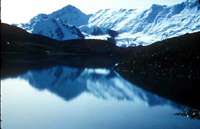 Nepal's climate varies with its topography and altitude. It ranges from the tropical to the arctic. The low-land Terai region with its maximum altitude to approximately 305m, which lies in the tropical southern part of the country, for instance, has a hot and humid climate that can rise above 45 Degree Celsius (113 Degree Fahrenheit) during summer. The mid-land regions are pleasant almost all the year round, although winter nights are cool. The northern mountain region, around an altitude above 3,300m has an alpine climate with considerably lower temperature in winter as can be expected.